 English
 Español
  Português
  русский
  Français
  日本語
日本語  Deutsch
  tiếng Việt
  Italiano
  Nederlands

Is Fishing Accessories Evolving Into a Smarter Outdoor Category?
The outdoor recreation industry continues to expand with increasing attention on product functionality, portability, and multi-scene usability. Within this trend, Fishing Accessories are gaining significant relevance among anglers, water sports enthusiasts, and leisure outdoor users. The demand is no longer limited to basic utility; instead, it focuses on integrated design, material innovation, and adaptable structures suitable for different environments.
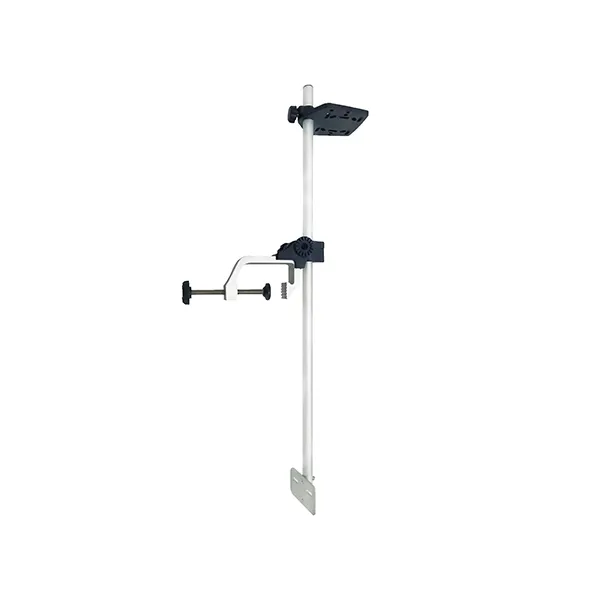
Market Development Overview
Design Direction in Outdoor Equipment
The outdoor equipment industry is undergoing a transformation driven by lifestyle changes and increased interest in water-based recreation. Product developers are focusing on versatile structures that can support multiple scenarios such as coastal fishing, river exploration, and lake-based leisure. Within this movement, Fishing Accessories are increasingly designed with adaptability as a core principle rather than an optional feature.
Material selection plays a central role in this evolution. Aluminum frameworks, reinforced polymers, and treated steel components are widely used to ensure durability and stability under different environmental conditions. These materials allow manufacturers to balance strength with portability, ensuring users can transport equipment easily without sacrificing performance.
Functional Integration Trends
Another important direction in product innovation is functional integration. Instead of relying on single-purpose tools, manufacturers are developing systems that combine storage, transport, and operational features. This approach is especially relevant for Fishing Accessories, where users often require flexible solutions for carrying gear across diverse terrains.
Integrated systems are also improving organization efficiency. Storage modules are being designed to accommodate different types of equipment while maintaining quick access during use. This reduces setup time and enhances overall outdoor experience, particularly in dynamic environments where conditions may change rapidly.
Material Innovation and Engineering Focus
Engineering advancements are significantly influencing the evolution of outdoor products. Lightweight alloys and reinforced composites are being adopted to improve structural integrity while maintaining ease of movement. Surface treatment technologies are also enhancing resistance to moisture, salt exposure, and long-term wear.
Within this context, Fishing Accessories are benefiting from improved manufacturing precision. Welding techniques, molding processes, and surface finishing methods are being refined to achieve higher consistency and reliability. These improvements contribute to longer product lifespan and better user confidence in challenging outdoor conditions.
Production Capability Structure
Manufacturing systems are becoming more specialized, with dedicated workshops focusing on different material categories and production stages. This structured approach allows for better quality control and more efficient workflow management. It also enables manufacturers to respond more quickly to customized requirements and evolving market needs.
| Material Processing Unit | Focuses on metal shaping and structural preparation |
| Surface Treatment Unit | Handles coating, oxidation, and protective finishing |
| Assembly Unit | Ensures final structure integration and product stability |
| Injection Unit | Produces polymer components with consistent molding quality |
User Experience and Application Scenarios
Outdoor users are increasingly seeking equipment that simplifies transportation and enhances usability across multiple environments. This has led to a stronger demand for products that combine portability with structural stability. In practical applications, Fishing Accessories are often evaluated based on ease of setup, durability under environmental stress, and adaptability to different water conditions.
Ergonomic improvements are also shaping user expectations. Handle designs, folding mechanisms, and weight distribution systems are being refined to reduce strain and improve handling comfort. These enhancements are particularly important for users who frequently transport equipment over long distances or across uneven terrain.
In addition, storage efficiency has become a key factor in product design. Compact folding systems and modular configurations allow users to optimize space usage during transport and storage. This is especially beneficial for outdoor enthusiasts who require flexible organization solutions.
Practical Usage Considerations
When evaluating outdoor equipment, users often consider environmental adaptability, structural resilience, and maintenance convenience. Products that perform consistently across different terrains are increasingly preferred. Within this framework, Fishing Accessories play a key role in supporting efficient outdoor operations and improving overall recreational experience.
Maintenance simplicity is also a critical factor. Equipment designed with accessible components and durable finishes reduces long-term upkeep requirements. This contributes to higher usability and extended service life, making the equipment more practical for frequent outdoor use.
Industry Innovation Direction
The outdoor equipment industry is expected to continue evolving toward smarter integration and improved material science applications. Design teams are focusing on reducing unnecessary complexity while enhancing core functionality. This approach supports more efficient production and better end-user experience.
Digital modeling and structural simulation technologies are also influencing product development. These tools allow engineers to test durability and performance under simulated environmental conditions before production begins. As a result, product reliability is improving across multiple categories, including Fishing Accessories.
Future-Oriented Development Concepts
Future design concepts emphasize sustainability, modularity, and long-term usability. Manufacturers are exploring recyclable materials and optimized production processes to reduce environmental impact. At the same time, modular structures are being refined to allow easier replacement and upgrade of components.
These innovations are shaping a more responsible and efficient production ecosystem. As outdoor recreation continues to grow, the demand for reliable and adaptable equipment will further increase, driving continuous improvement across the industry.
Company Strength and Market Position
Ningbo Marine Outdoors has established a strong position in the outdoor equipment industry through consistent focus on product development and manufacturing capability. The company operates multiple specialized workshops covering metal processing, surface treatment, injection molding, and final assembly, ensuring comprehensive control over production quality.
With extensive experience in outdoor product design and manufacturing, the company provides integrated solutions from concept development to final delivery. Its engineering team focuses on practical innovation, ensuring products meet the evolving needs of global outdoor users.
The company’s product range includes beach transport systems, kayak support structures, storage solutions, and various outdoor mobility equipment. Within this portfolio, Fishing Accessories are developed with emphasis on durability, functionality, and user-friendly design, reflecting the company’s commitment to quality and innovation.
Through continuous improvement in production technology and design capability, Ningbo Marine Outdoors remains committed to delivering reliable outdoor solutions that support diverse recreational and professional applications.
Send Inquiry



X
We use cookies to offer you a better browsing experience, analyze site traffic and personalize content. By using this site, you agree to our use of cookies.
Privacy Policy