 English
 Español
  Português
  русский
  Français
  日本語
日本語  Deutsch
  tiếng Việt
  Italiano
  Nederlands

How Do Beach Wheels Improve Mobility on Sand and Coastal Terrain?
Article Abstract
Beach wheels are specialized mobility components designed to operate efficiently on soft, unstable surfaces such as sand, mud, and coastal terrain. This article provides a comprehensive technical and practical analysis of beach wheels, focusing on structural design, material specifications, load performance, and real-world applications. The discussion is structured around how beach wheels address common mobility challenges in beach environments, supported by detailed parameters, frequently asked questions, and industry references. The goal is to present a clear, professional, and search-optimized resource aligned with real user search intent.
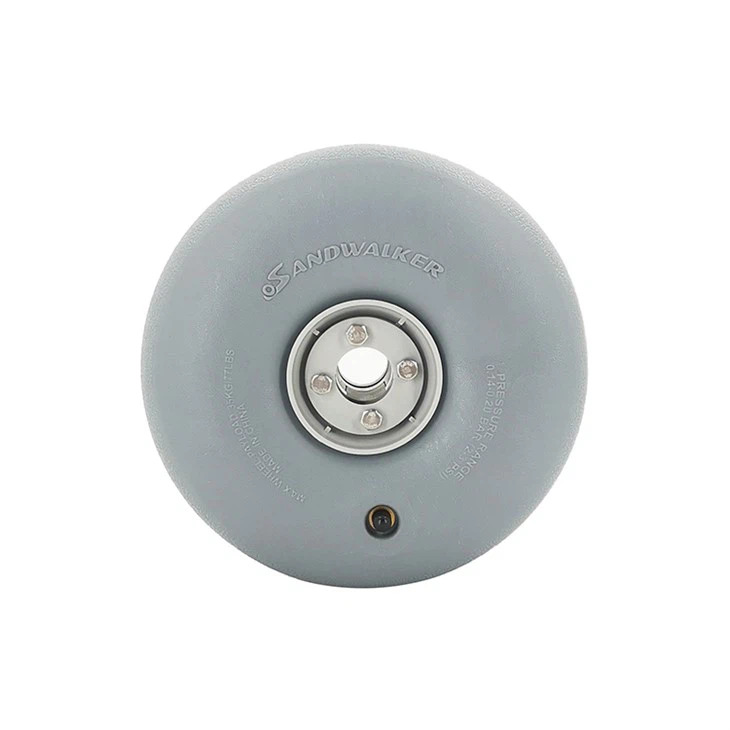
Table of Contents
- How Are Beach Wheels Designed for Soft Sand Environments?
- How Do Beach Wheel Parameters Affect Performance and Load Capacity?
- How Are Beach Wheels Applied Across Different Coastal Use Scenarios?
- How Is the Beach Wheels Market Expected to Evolve in the Coming Years?
Content Outline
- Product overview and core design logic
- Technical parameters and engineering considerations
- Application scenarios and operational performance
- Common questions and detailed answers
- Industry outlook and brand positioning
How Are Beach Wheels Designed for Soft Sand Environments?
Beach wheels are engineered to solve a specific mobility problem: traditional narrow wheels sink into loose sand due to high ground pressure. Beach wheels address this challenge through wide contact surfaces, low internal air pressure, and corrosion-resistant materials that withstand saltwater exposure.
The defining feature of beach wheels is their ability to distribute load evenly across a larger surface area. By reducing ground pressure, these wheels maintain flotation rather than penetration. This design principle is widely applied in beach carts, fishing trolleys, rescue equipment, and small marine transport systems.
Structurally, beach wheels often use sealed bearings to prevent sand ingress, combined with UV-stabilized polymers or rubber compounds that resist cracking under prolonged sun exposure. The axle interface is typically standardized to allow compatibility with common cart frames and marine equipment.
How Do Beach Wheel Parameters Affect Performance and Load Capacity?
Performance on sand is directly influenced by wheel dimensions, material composition, and inflation characteristics. Below is a consolidated overview of typical beach wheel parameters used across coastal applications.
| Parameter | Specification Range | Functional Impact |
|---|---|---|
| Wheel Diameter | 240 mm – 490 mm | Larger diameters improve obstacle clearance and rolling efficiency |
| Wheel Width | 90 mm – 180 mm | Wider profiles reduce sinking in soft sand |
| Material | PU, Rubber, PVC Composite | Balances durability, flexibility, and corrosion resistance |
| Load Capacity | 40 kg – 120 kg per wheel | Determines suitability for carts, equipment, or rescue use |
| Bearing Type | Sealed Stainless or Polymer | Prevents sand and saltwater intrusion |
These parameters are selected based on operational context. For example, fishing carts prioritize higher load capacity, while recreational beach carts emphasize maneuverability and lightweight construction.
How Are Beach Wheels Applied Across Different Coastal Use Scenarios?
Beach wheels are widely used in both recreational and professional environments. Their versatility allows them to perform reliably where conventional wheels fail.
In recreational settings, beach wheels are commonly installed on beach wagons, kayak carts, and surfboard trolleys. Their low rolling resistance enables users to transport equipment across dry sand with minimal physical effort.
In commercial and institutional use, beach wheels support lifeguard rescue carts, marine research equipment, and coastal maintenance tools. The ability to move heavy loads quickly across unstable terrain can directly impact response time and operational safety.
The same design logic also applies to niche applications such as event logistics on beaches, seaside resorts, and eco-tourism operations, where minimizing surface disruption is a priority.
Beach Wheels Common Questions and Detailed Answers
Q: How do beach wheels prevent sinking into soft sand?
A: Beach wheels reduce sinking by increasing surface contact area and lowering ground pressure. Wide profiles and low-pressure inflation allow the wheel to float over sand rather than dig into it.
Q: How should beach wheels be maintained in saltwater environments?
A: Regular rinsing with fresh water is recommended to remove salt residue. Sealed bearings significantly reduce maintenance requirements, but periodic inspection ensures long-term performance.
Q: How can the correct beach wheel size be selected for a specific cart?
A: Selection should be based on total load weight, axle diameter, and typical terrain conditions. Larger diameters and widths are preferred for loose sand, while smaller profiles may suit compact carts.
How Is the Beach Wheels Market Expected to Evolve in the Coming Years?
The demand for beach wheels is closely tied to growth in coastal recreation, marine tourism, and outdoor logistics. As beaches become more regulated and environmentally sensitive, mobility solutions that minimize surface impact are gaining attention.
Material innovation is expected to play a key role, with manufacturers exploring lighter composites, enhanced UV resistance, and improved recyclability. Standardization of axle interfaces and modular designs will further expand compatibility across different platforms.
Customization is also emerging as a trend, allowing end users to specify load ratings, tread patterns, and bearing systems based on application requirements. These developments position beach wheels as a mature yet evolving product category.
Within this evolving landscape, Ningbo Marine continues to focus on precision manufacturing and application-oriented design for beach wheels. By aligning engineering standards with real coastal use conditions, the brand supports consistent performance across recreational and professional scenarios.
For further information on specifications, customization options, or application guidance, contact us to discuss project-specific requirements and technical support.
Send Inquiry



X
We use cookies to offer you a better browsing experience, analyze site traffic and personalize content. By using this site, you agree to our use of cookies.
Privacy Policy